Brass is an alloy primarily composed of copper (Cu) and zinc (Zn). By varying the proportions of these two elements and adding small amounts of other metals like lead, tin, or aluminum, a wide spectrum of brass alloys is created, each tailored for specific industrial applications.
Classification of Brass Alloys
Brass alloys are generally classified based on their crystal structure, which is determined by the zinc content:
- Alpha Brasses (< 37% Zinc): Highly ductile, can be worked cold. Used for deep drawing, stamping, and pressing.
- Alpha-Beta Brasses (37% - 45% Zinc): Also known as duplex brasses. Harder and stronger, ideal for hot working like forging and extrusion.
- Beta Brasses (> 45% Zinc): Hard and brittle, rarely used in commercial manufacturing.
Key Brass Grades and Specifications
Understanding specific grades is crucial for material selection.
| Alloy Grade | Standard | Key Properties & Applications |
|---|---|---|
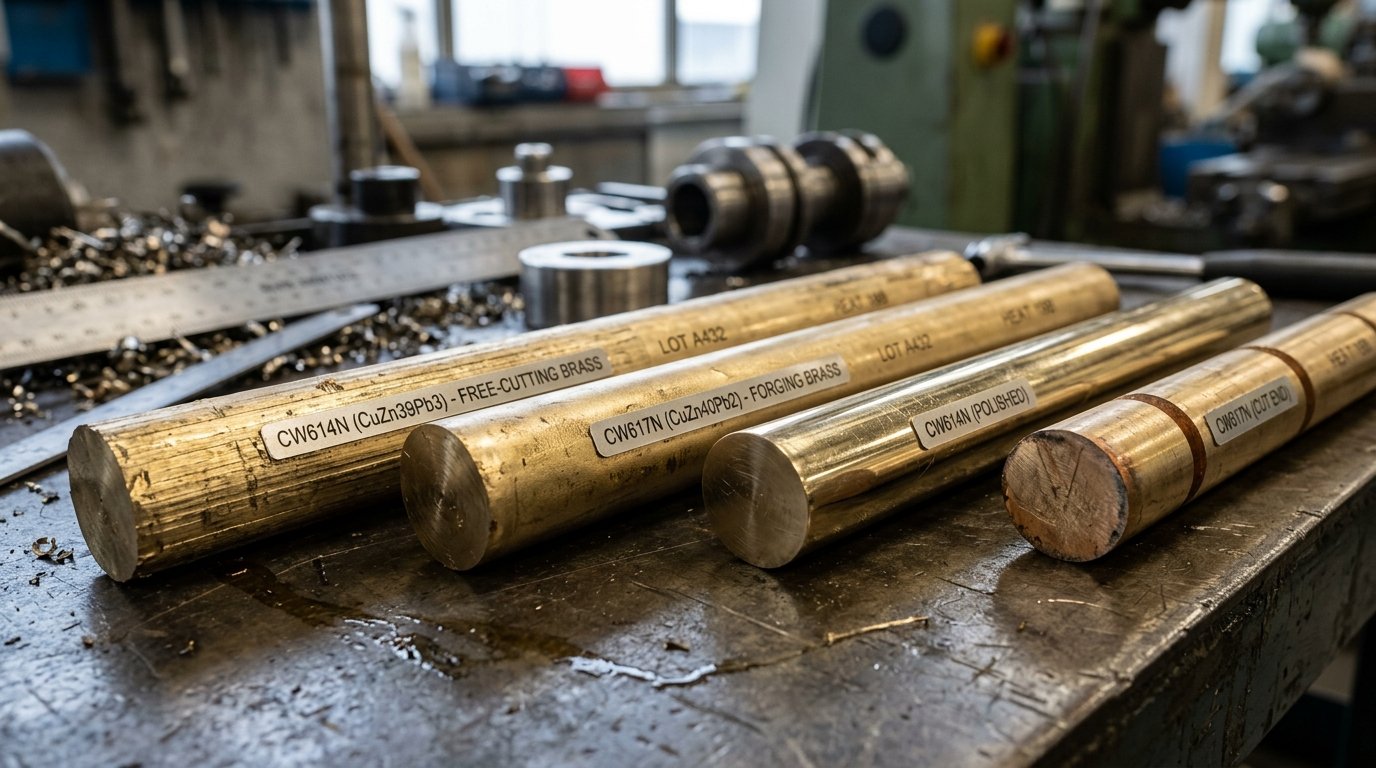
| CW614N (CuZn39Pb3) | EN 12164 | The standard free-machining brass. Excellent for high-speed CNC turning. Used in electrical parts, fasteners, and fittings. |
| CW617N (CuZn40Pb2) | EN 12165 | Stamping and forging brass. Excellent hot working properties. Widely used for valves, sanitary fittings, and geas. |
| CW602N (CuZn36Pb2As) | EN 12164/12165 | Dezincification Resistant (DZR) brass. Contains arsenic to prevent corrosion in water systems. Essential for plumbing. |
| IS 319 (Type 1 & 2) | Indian Standard | Free cutting brass bars, rods, and sections. Equivalent to CZ121. Standard in the Indian manufacturing sector. |
Chemical Composition of CW614N
| Element | Percentage (%) |
|---|---|
| Copper (Cu) | 57.0 - 59.0 |
| Lead (Pb) | 2.5 - 3.5 |
| Zinc (Zn) | Balance |
| Iron (Fe) | 0.3 max |
Frequently Asked Questions
What are the primary differences between CW614N and CW617N brass alloys?
CW614N (CuZn39Pb3) is the European standard free-machining brass containing 3% lead for maximum high-speed CNC turning efficiency. CW617N (CuZn40Pb2) has 2% lead and 40% zinc, optimizing hot plastic deformation for hot forging and stamping applications.
Why is lead added to free-cutting brass alloys like CZ121 / CW614N?
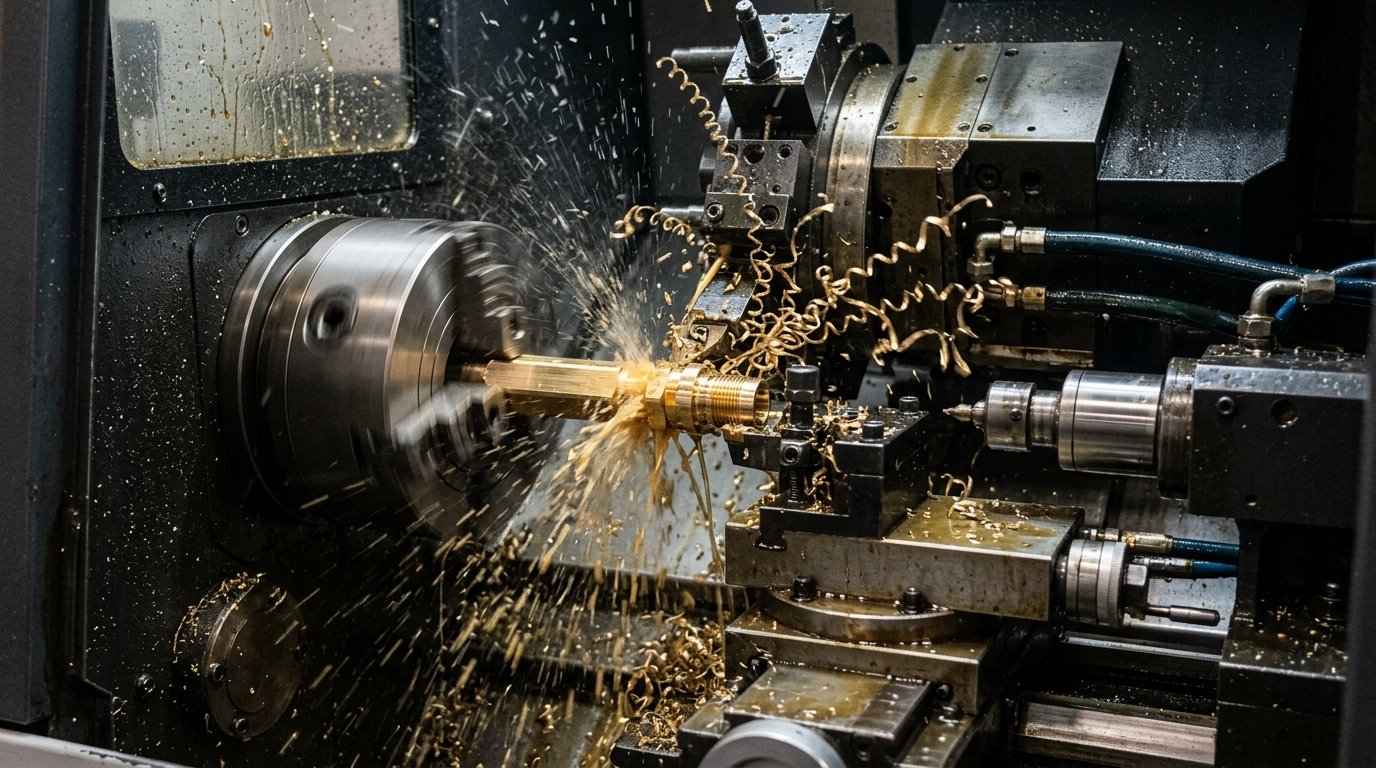
Lead acts as an internal microscopic lubricant during cutting. It breaks long stringy turnings into small, manageable chips, reducing tool friction, lowering spindle load, and doubling cutting tool lifespan.
Are Divine Brass components compliant with global RoHS and REACH regulations?
Yes. Divine Brass manufactures components using lead-free brass (CW511L / C27450) and low-lead variants (<0.1% Pb) specifically certified to meet strict EU RoHS 3 and REACH SVHC environmental directives.