
Selecting the right material is a critical decision in engineering and manufacturing. Two of the most commonly compared metals are brass and stainless steel. Both offer distinct advantages and are suited for different applications based on their physical, mechanical, and chemical properties.
Material Properties Comparison
To make an informed decision, it's essential to evaluate these metals across key parameters.
| Property | Brass (e.g., Free-Machining Brass) | Stainless Steel (e.g., 304/316) |
|---|---|---|
| Machinability | Excellent (Benchmark 100%) | Fair to Good (Often 40-50%) |
| Corrosion Resistance | Good (Susceptible to dezincification in harsh environments) | Excellent (Highly resistant to rust and chemical attack) |
| Electrical Conductivity | Good (28% IACS) | Poor (Approx. 2-3% IACS) |
| Thermal Conductivity | High | Low |
| Antimicrobial Properties | Excellent (Naturally kills bacteria) | None |
Cost Implications
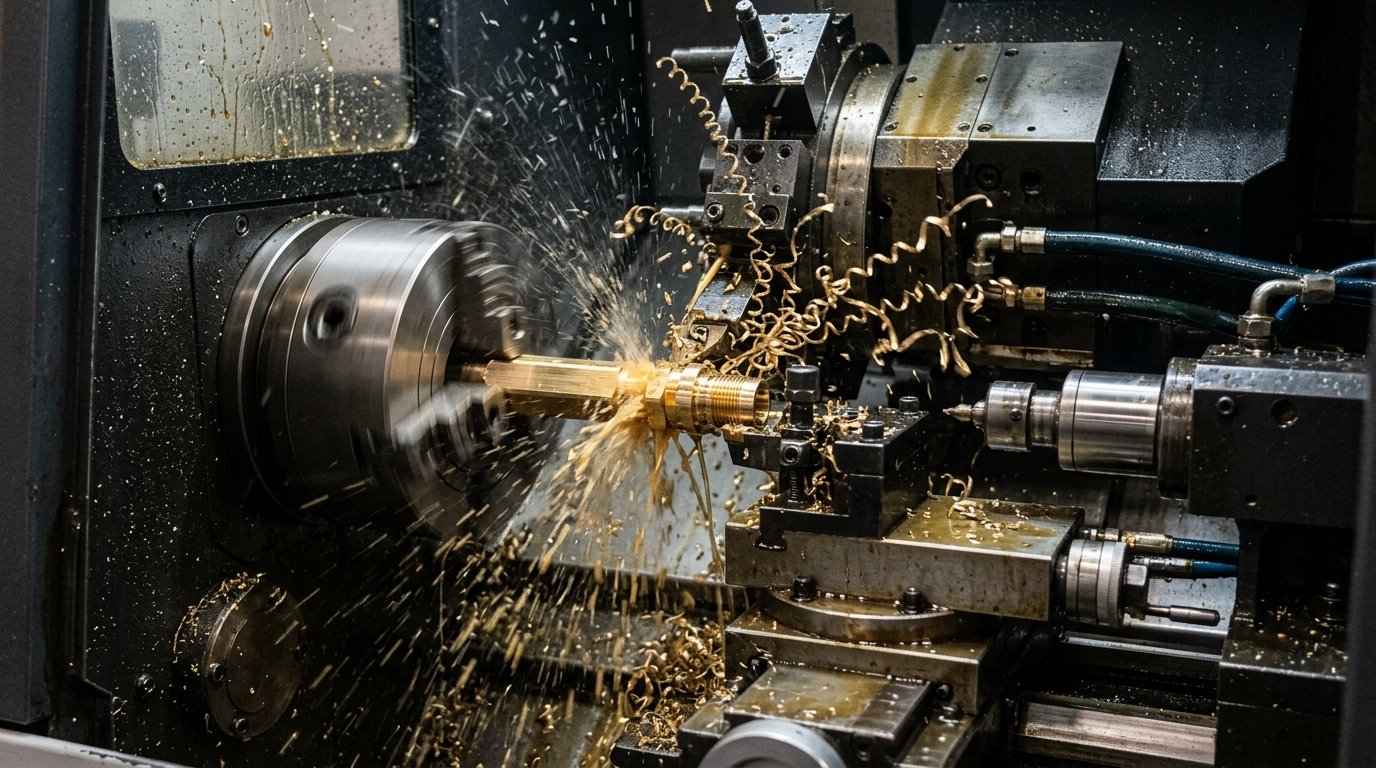
The cost comparison between brass and stainless steel is multifaceted. While the raw material cost per kg for brass is often higher than some grades of stainless steel, the manufactured cost of the final component can be lower with brass. This is due to its superior machinability, which reduces tool wear, lowers energy consumption, and shortens machine cycle times.
Application Recommendations
- Choose Brass For: Electrical terminals, plumbing fittings, decorative hardware, low-friction applications (gears, bearings), and components requiring intricate machining.
- Choose Stainless Steel For: High-stress components, food processing equipment, marine hardware, and applications exposed to highly corrosive chemicals.
Frequently Asked Questions
Why is brass 3x faster to CNC machine than 316L stainless steel?
Brass CW614N has a 100% machinability index with low cutting resistance, allowing cutting speeds up to 350 m/min, whereas 316L stainless steel (45% index) causes rapid work hardening and tool wear.
When should an engineer select brass over stainless steel?
Select brass when high electrical/thermal conductivity, anti-galling thread properties, spark-resistance, or cost-effective high-volume CNC turning is required.
How does component cost compare between turned brass and stainless steel?
Due to faster machining cycle times (50% reduction) and 5x longer cutting tool life, finished brass turned parts are typically 35% to 50% cheaper than equivalent stainless steel parts.