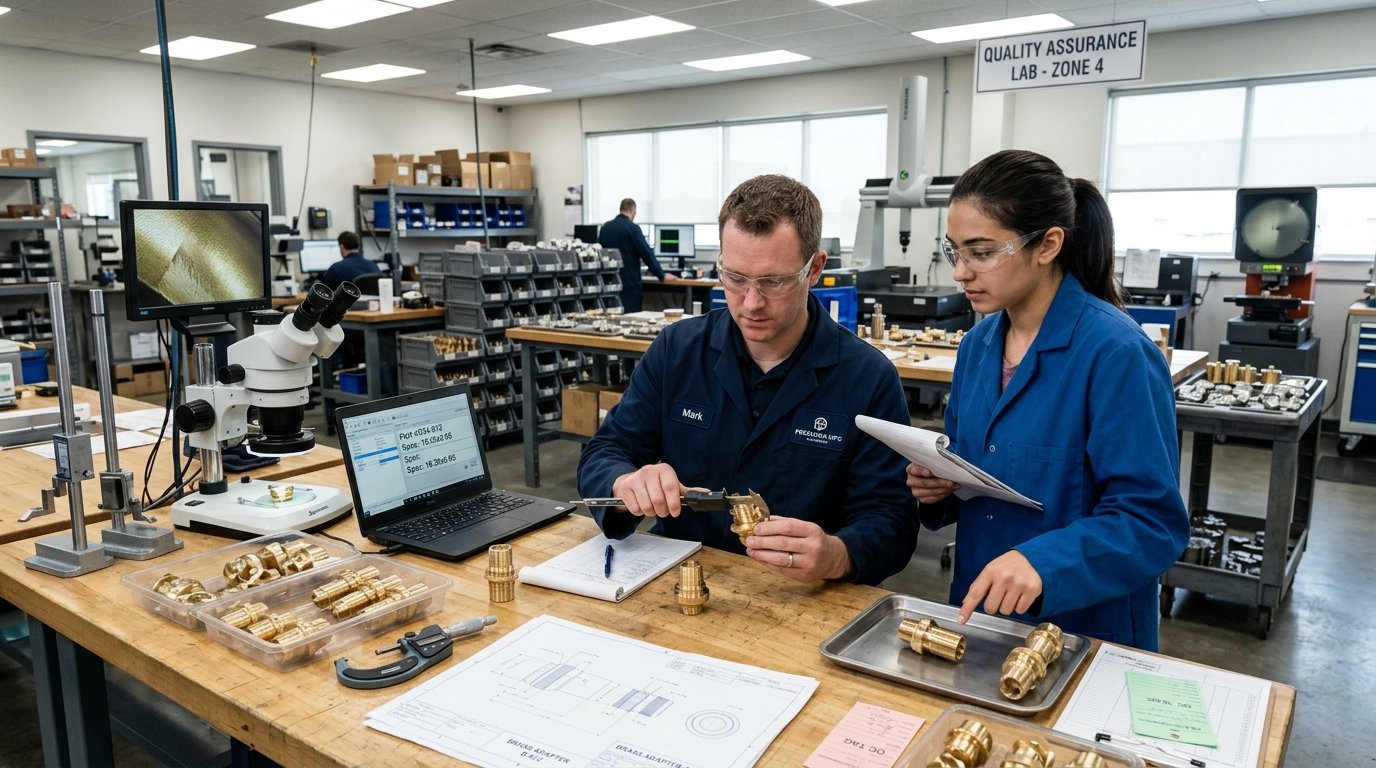
Sourcing precision brass components is a critical step that directly impacts the quality, cost, and reliability of your final product. With thousands of manufacturers globally, particularly in hubs like Jamnagar, India, selecting the right partner requires a systematic approach.
10 Key Factors to Evaluate
- ISO Certification & Quality Systems: Ensure the manufacturer holds current ISO 9001:2015 certification, indicating established quality management protocols.
- In-house Material Testing: The supplier must have a Spectrometer to verify the chemical composition of raw materials, ensuring compliance with standards like RoHS and REACH.
- Advanced Manufacturing Capabilities: Look for a mix of conventional automats for simple parts and advanced multi-axis CNC/Swiss machines for complex, tight-tolerance components.
- Lead Times and Scalability: Can they handle your current volume and scale up as your business grows? Discuss average lead times for prototypes and production runs.
- Export Experience: If sourcing internationally, the manufacturer must understand export documentation, customs procedures, and international packaging standards (e.g., seaworthy pallets).
- Minimum Order Quantity (MOQ): Clarify their MOQ policies to ensure they align with your inventory strategy.
- Communication and Responsiveness: A reliable partner communicates clearly, promptly, and understands technical engineering drawings.
- Sample Policy: Always request First Article Inspection (FAI) samples before authorizing full production.
- Pricing Transparency: The quotation should clearly outline material costs, machining costs, plating/finishing, and tooling charges.
- Infrastructure and Working Conditions: If possible, conduct a factory audit to assess their infrastructure, safety protocols, and worker welfare.
Red Flags to Avoid
Be wary of manufacturers who hesitate to provide material test certificates, lack a dedicated quality control department, or offer prices significantly below the market rate for raw brass (LME + premium).
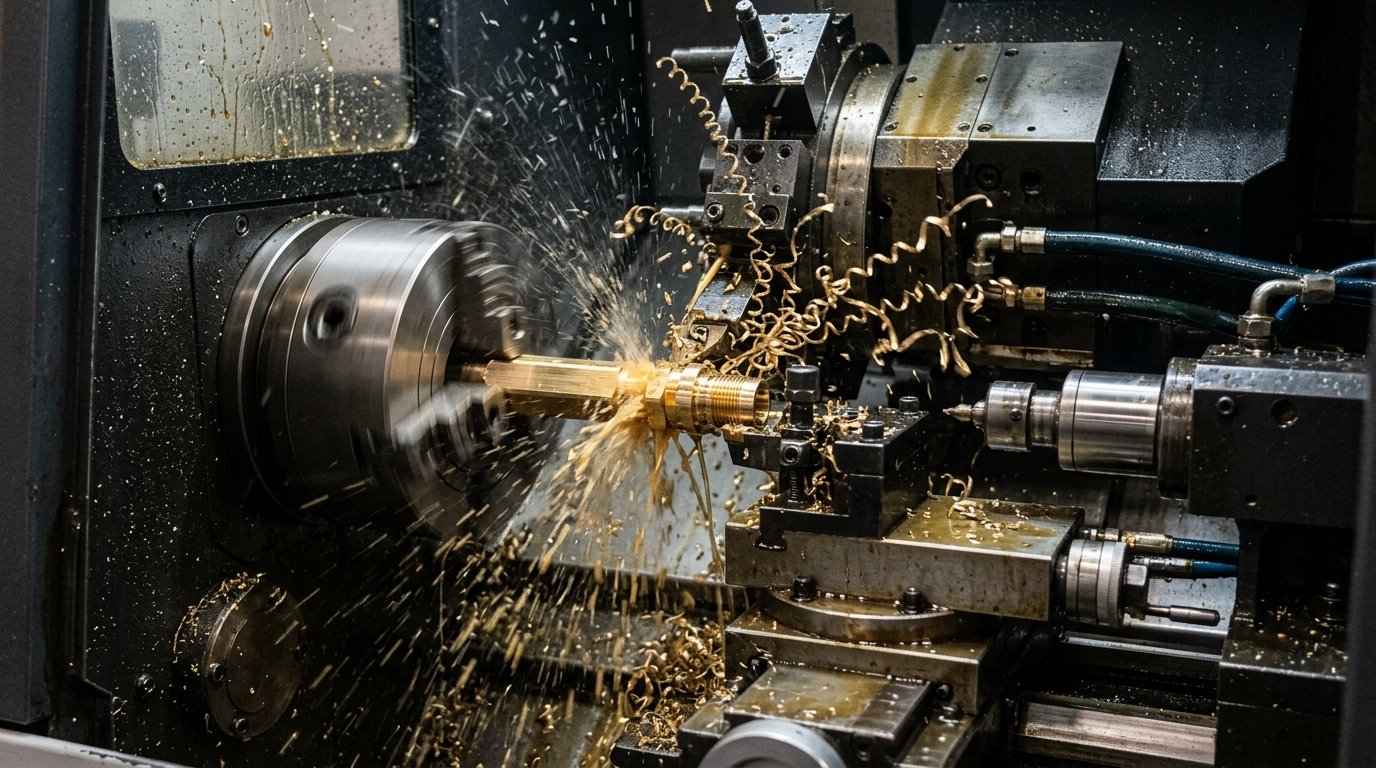
At Divine Brass Industries, we pride ourselves on meeting and exceeding these criteria, offering transparent communication, stringent spectro-tested quality, and decades of export expertise.
Frequently Asked Questions
What certifications should a reputable brass component manufacturer possess?
Top manufacturers hold ISO 9001:2015 Quality Management certification, ISO 14001 Environmental certification, and full material compliance with RoHS 3, REACH, and Conflict Minerals regulations.
How does purchasing direct from Jamnagar manufacturers reduce costs?
Jamnagar hosts over 5,000 brass units with an integrated ecosystem of raw material melting, extrusion, tooling, plating, and testing facilities, reducing component costs by 35% to 45% compared to Western suppliers.
What documentation is provided with international brass export shipments?
Divine Brass provides 3.1 Material Test Certificates (MTC), CMM dimensional inspection reports, Certificate of Origin, Salt Spray test reports, and customs packing lists with every container export.