While raw brass has excellent natural corrosion resistance and an aesthetically pleasing golden color, many applications require specialized surface finishes. Finishing can enhance durability, alter electrical conductivity, improve solderability, or provide a specific decorative look. Understanding the array of available plating and polishing options ensures your component meets both functional and aesthetic requirements.
Types of Brass Surface Finishes
We routinely apply several types of functional and decorative finishes to brass parts:
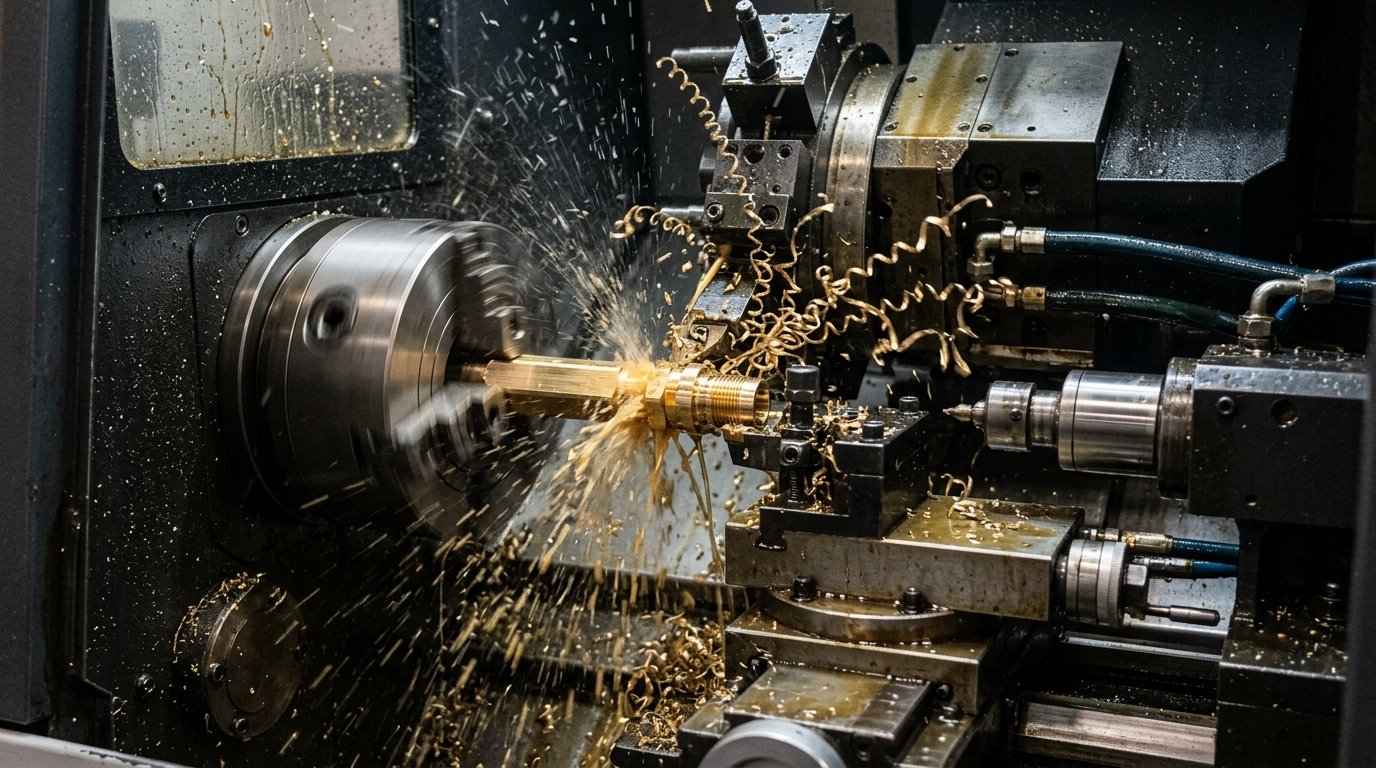
- Natural Brass / Passivation: Parts are cleaned to remove oils and light oxidation. A chemical passivation process can be applied to prevent immediate tarnishing, keeping the natural brass look intact.
- Polishing & Lacquering: For decorative parts (like interior hardware or instruments), brass is polished to a mirror finish and sealed with a clear lacquer to prevent natural oxidation (patina) over time.
- Nickel Plating: A very common finish for sensor parts and fluid fittings. It provides excellent corrosion and wear resistance with a bright, silver-like appearance. Usually applied in thicknesses of 5 to 15 microns.
- Electroless Nickel Plating (ENP): Unlike standard electrolytic nickel, ENP deposits a completely uniform layer regardless of part geometry (even in deep holes). It offers superior hardness and corrosion resistance.
- Chrome Plating: Often applied over a base layer of nickel. Chrome provides extreme hardness, tarnish resistance, and a brilliant, highly reflective finish. Common in sanitary parts and automotive trim.
- Tin Plating: Primarily used in electrical applications. Tin plating provides excellent solderability and prevents the brass from oxidizing, ensuring stable electrical contact resistance.
Performance Testing: ASTM B117
To verify the protective quality of a finish, parts are subjected to Salt Spray Testing, commonly standard ASTM B117. During this test, parts are placed in a chamber with a highly corrosive 5% salt fog.
For example, a standard 10-micron Nickel-plated brass part might withstand 96 to 120 hours of salt spray before exhibiting "red rust" or base metal corrosion. Specifying the required salt spray hours is critical when ordering finished components for harsh environments.
Finish Comparison Guide
| Finish Type | Primary Benefit | Typical Applications | Relative Cost |
|---|---|---|---|
| Natural / Cleaned | Lowest cost, natural look | Internal components, water fittings | Low |
| Nickel Plating | Corrosion resistance, aesthetics | Sensors, pneumatic fittings, fasteners | Medium |
| Chrome Plating | Extreme hardness, brilliant shine | Sanitary fixtures, decorative hardware | High |
| Tin Plating | Solderability, electrical contact | Electrical terminals, switchgear, PCB pins | Medium |
| Electroless Nickel (ENP) | Uniform thickness, high wear resistance | Complex geometries, high-wear valves | High |
Frequently Asked Questions
What are the advantages of electroless nickel plating on brass parts?
Electroless nickel plating (3-10 µm) provides uniform coating thickness even inside complex internal threads, increasing surface hardness to 550 HV and resisting chemical wear.
When is tin plating recommended over nickel plating for brass?
Tin plating is preferred for electrical grounding terminals and food-contact plumbing parts due to its low electrical contact resistance and non-toxic properties.
How long do brass surface finishes last in ASTM B117 salt spray testing?
Nickel and chrome plated brass components withstand 96 to 500+ hours of continuous salt spray exposure without base metal corrosion.