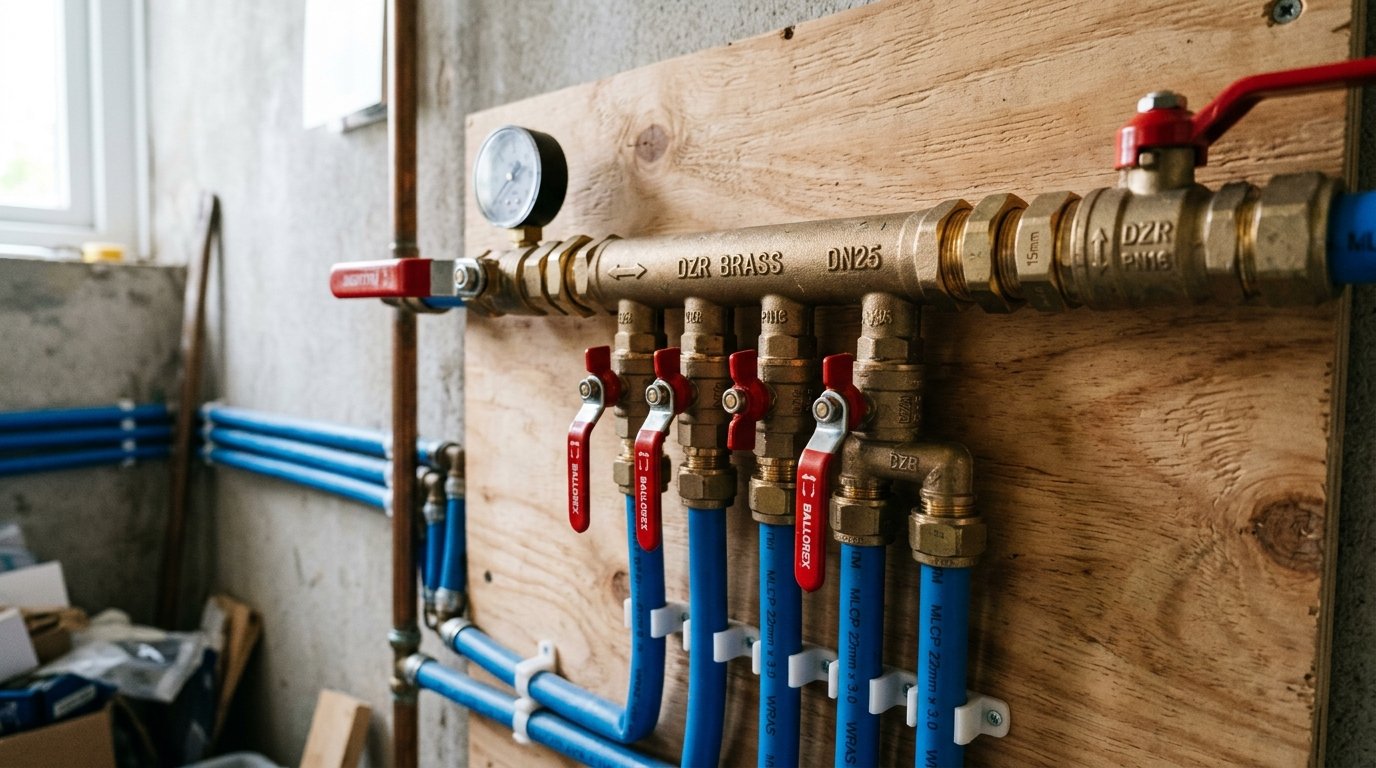
For centuries, brass has been the material of choice for plumbing systems and fluid control, and for good reason. As an alloy of copper and zinc, brass combines exceptional machinability with superior corrosion resistance, making it an indispensable material for water transport and regulation.
Why Brass Prevails in Plumbing
The dominance of brass in water systems is primarily due to its resilience. It withstands high temperatures without degrading and resists corrosion exceptionally well, even in highly mineralized "hard" water. Furthermore, the high copper content in brass exhibits natural antimicrobial properties, helping to reduce the buildup of bacteria in water lines.
Types of Plumbing Fittings
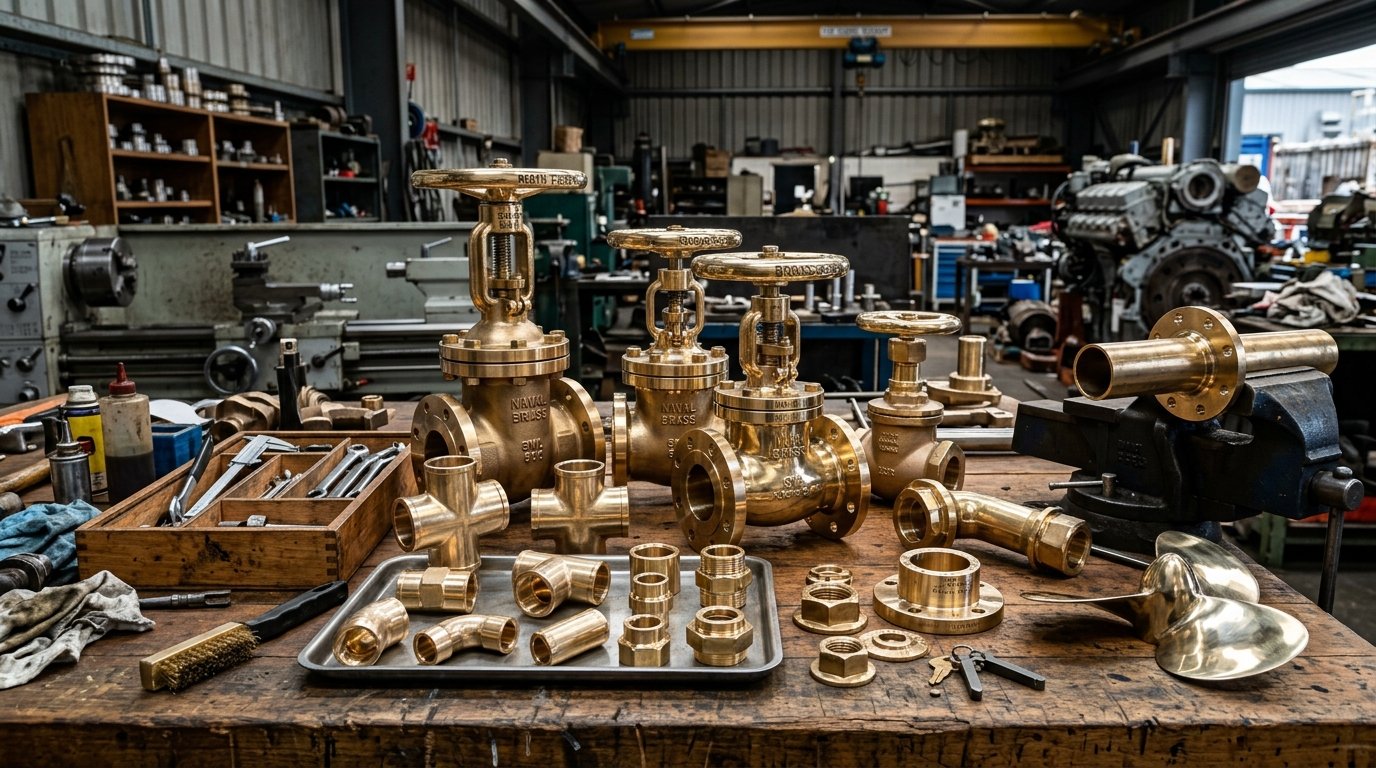
Brass is highly adaptable and can be machined or forged into numerous types of connections:
- Compression Fittings: Ideal for joining copper pipes without the need for heat.
- Push-Fit Fittings: Modern, fast-installation components incorporating internal grab rings and O-rings.
- Soldered (Sweat) Fittings: Traditional, permanent capillary joints used in commercial setups.
- Threaded Fittings: Precision-machined NPT or BSP threads for secure valve and fixture connections.
DZR and Lead-Free Regulations
In regions with certain water chemistries, standard brass can suffer from dezincification—where zinc leaches out of the alloy, leaving a porous, weakened copper structure behind. To combat this, Dezincification-Resistant (DZR or DR) brass, such as CW602N, is required for potable water applications.
Additionally, global regulations (such as the US Safe Drinking Water Act and European Drinking Water Directives) now strictly mandate the use of lead-free brass (containing less than 0.25% lead) in any component contacting water intended for human consumption.
Common Brass Plumbing Components
| Component | Primary Function | Why Brass is Used |
|---|---|---|
| Ball Valves | On/off flow control | Precision sealing, withstands high torque during operation |
| Gate Valves | Linear flow regulation | Superior wear resistance for internal moving wedge |
| Manifolds | Distributing flow (e.g., radiant heating) | Excellent thermal conductivity and leak-proof threading |
| Hose Connectors | Connecting flexible hoses to rigid lines | Resists mechanical stress and crushing forces |
By partnering with an experienced manufacturer like Divine Brass Industries, you ensure your plumbing components meet all international dimensional standards, DZR requirements, and lead-free compliance.
Frequently Asked Questions
What is Dezincification Resistant (DZR) brass?
DZR brass (CW602N / CuZn36Pb2As) is a specialized plumbing alloy treated with 0.08% arsenic. It resists selective zinc leaching caused by aggressive or acidic potable water.
Why choose DZR brass for underground water distribution manifolds?
DZR brass prevents structural weakening and internal wall pinhole leaks, ensuring a 50+ year maintenance-free plumbing service life under ISO 6509 testing standards.
What lead limits apply to drinking water brass valves under US NSF/ANSI 61?
Under NSF/ANSI 61 and 372 standards, the weighted lead content of wetted plumbing surface area must not exceed 0.25%, requiring lead-free CW511L brass alloys.