
The marine and shipbuilding industries operate in one of the most hostile environments on earth. Seawater is highly corrosive, making material selection a critical engineering decision. Brass, specifically formulated marine alloys, has been a staple in maritime applications for centuries.
Naval Brass and Seawater Resistance
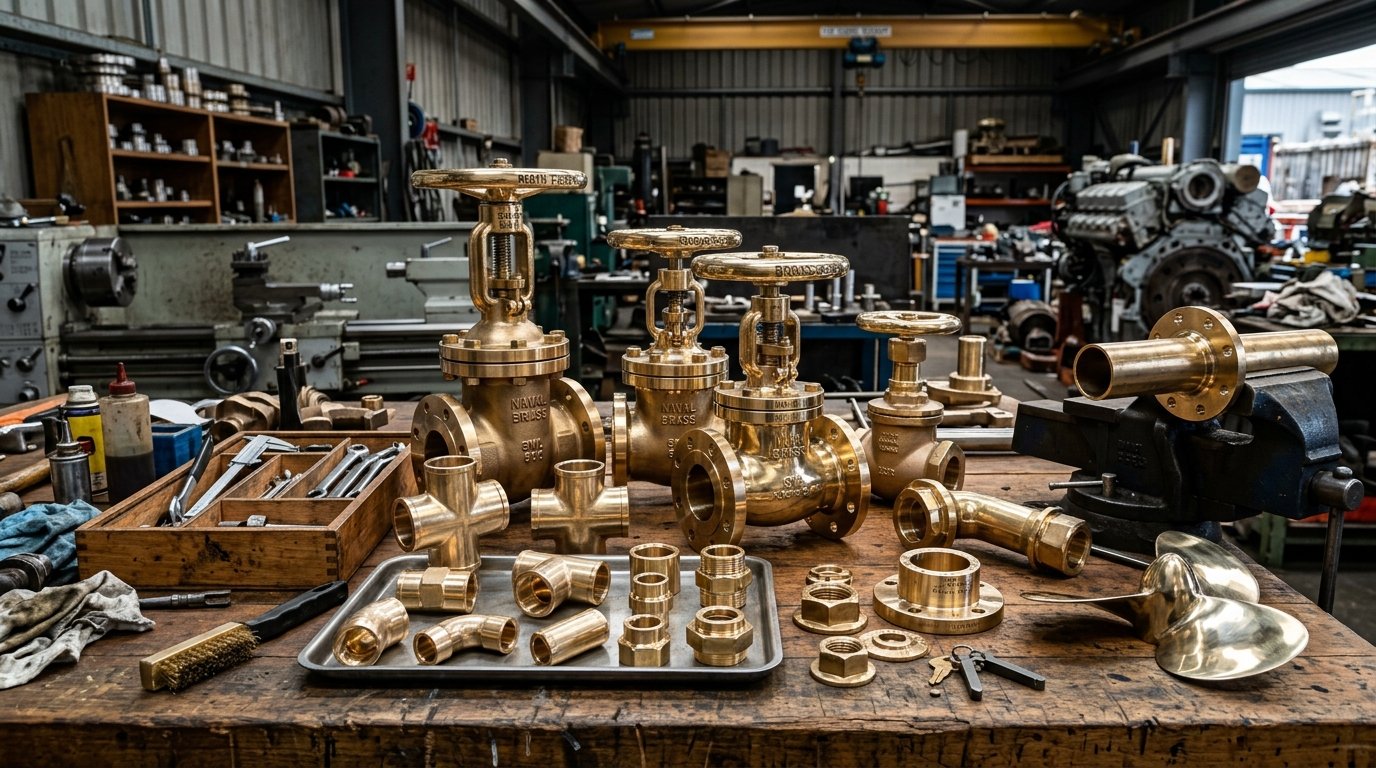
Naval Brass (C46400), alloyed with a small amount of tin, offers exceptional resistance to dezincification and corrosion in saltwater. This makes it the material of choice for submerged components, propeller shaft bearings, and robust through-hull fittings.
| Marine Component | Advantage of Using Brass |
|---|---|
| Through-Hull Fittings | High corrosion resistance, leak-proof seal |
| Propeller Shaft Bearings | Excellent wear resistance and machinability |
| Marine Valves | Durability under high hydraulic pressure |
Durability and Reliability
Beyond corrosion resistance, brass components in marine applications offer high mechanical strength and biofouling resistance, ensuring long service life for critical ship systems and port infrastructure.
For custom marine fittings, explore our Fitting Parts or .
Frequently Asked Questions
What makes Naval Brass (C46400 / CW712R) resistant to sea-water corrosion?
Naval brass contains approximately 1% tin (Sn) added to a 60/40 copper-zinc base, which creates a protective passivating layer preventing biofouling and dezincification in salt water.
Which marine hardware parts are machined from brass?
Key marine components include propeller shaft bushings, sea-cock valves, pipe strainers, hull fittings, navigational instrument housings, and marine electrical connectors.
How does Naval Brass compare to Aluminum Bronze for marine hardware?
Naval brass provides excellent corrosion resistance at a 30% lower material cost, making it ideal for non-structural fittings, while aluminum bronze is preferred for extreme load-bearing propellers.