Nickel Plating on Brass: Overview
Nickel plating on brass creates a brilliant silver-chrome appearance virtually identical to stainless steel. The electroplating process deposits a 5-25 micron nickel layer that provides enhanced corrosion resistance, hardness (up to 700 HV), and a consistent aesthetic finish. This makes nickel-plated brass a cost-effective alternative to solid stainless steel.
Appearance & Aesthetic Comparison
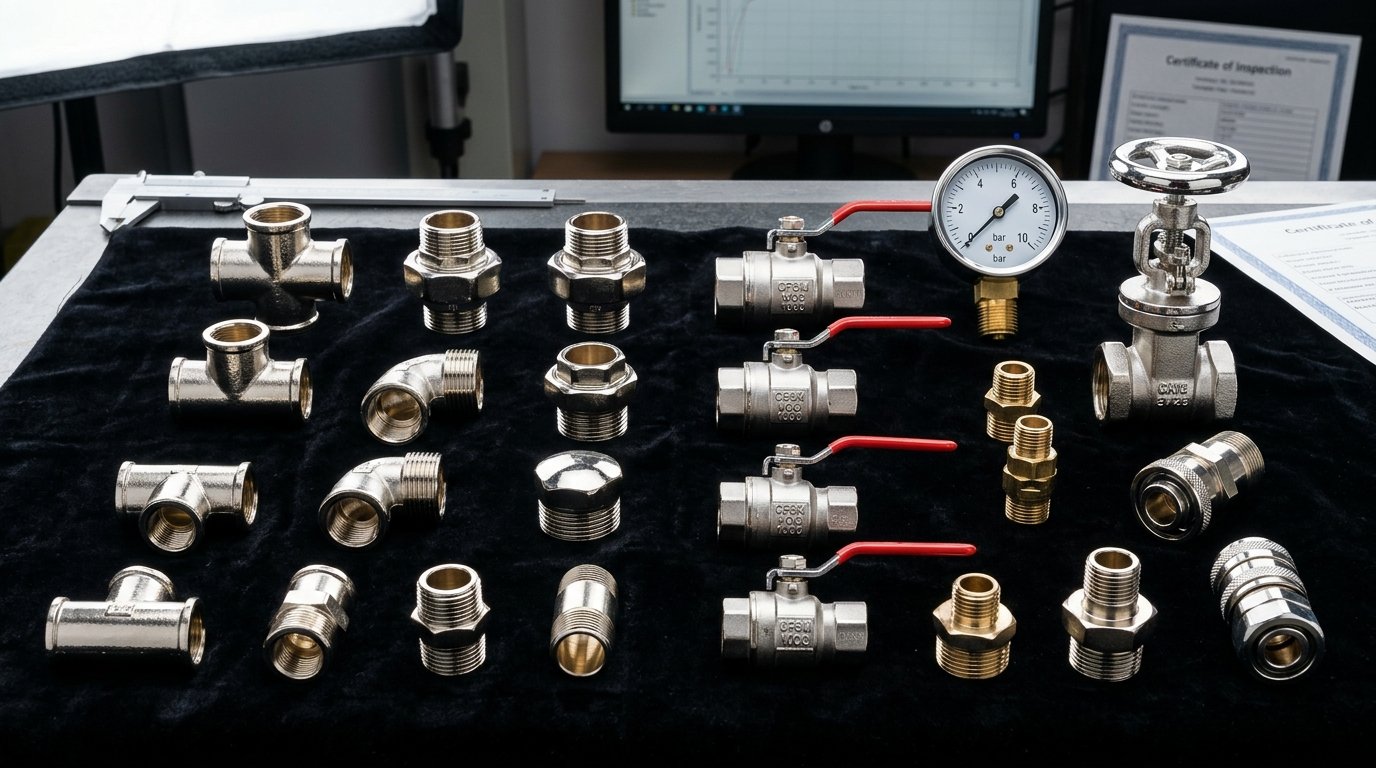
Nickel-plated brass achieves a mirror-bright finish (Ra less than 0.2 micrometers) that closely mimics polished stainless steel. The silver-chrome color is consistent and uniform. In blind comparison tests, most people cannot distinguish nickel-plated brass from stainless steel.
The plating also prevents brass tarnishing.
| Property | Nickel Plated Brass | Solid 304 Stainless |
|---|---|---|
| Surface Hardness | Up to 700 HV | 130-180 HB |
| Appearance | Bright silver-chrome | Silver metallic |
| Salt Spray Resistance | 200+ hours (ASTM B117) | 500+ hours |
| Machining Cost | Lower (brass substrate) | Higher |
| Total Component Cost | 20-35% less | Baseline |
Performance After Nickel Plating
Nickel-plated brass combines the best of both worlds: the superior machinability and conductivity of brass with the surface hardness and corrosion resistance of nickel. Salt spray resistance exceeds 200 hours per ASTM B117. The plating adds negligible weight (less than 0.1g per typical fitting).
Cost: Nickel Plated Brass vs Solid Stainless Steel
Nickel-plated brass components cost approximately 20-35% less than equivalent solid stainless steel parts. The machining cost savings (brass machines 2-3x faster) more than offset the plating cost ($0.10-0.50 per part depending on size). For high-volume production, savings are substantial.
| Property | Nickel Plated Brass | Solid 304 Stainless |
|---|---|---|
| Surface Hardness | Up to 700 HV | 130-180 HB |
| Appearance | Bright silver-chrome | Silver metallic |
| Salt Spray Resistance | 200+ hours (ASTM B117) | 500+ hours |
| Machining Cost | Lower (brass substrate) | Higher |
| Total Component Cost | 20-35% less | Baseline |
Frequently Asked Questions
Is nickel plated brass as good as stainless steel?
For most decorative and moderate-duty applications, yes. Nickel-plated brass offers comparable appearance and corrosion resistance at lower cost. For extreme chemical environments or applications requiring solid metal throughout, stainless steel remains superior.
Does nickel plating wear off brass?
Quality nickel plating (10-25 microns thick) is highly durable and does not peel or flake under normal use. Industrial-grade electroplated nickel on brass has a service life exceeding 10 years in typical indoor applications.
Can you tell the difference between nickel plated brass and stainless steel?
Visually, they are nearly identical. The main differences are weight (brass is slightly heavier), magnetic properties (brass is non-magnetic while some stainless steels are slightly magnetic), and a subtle warmth to the brass tone when examined closely.