Machinability Comparison
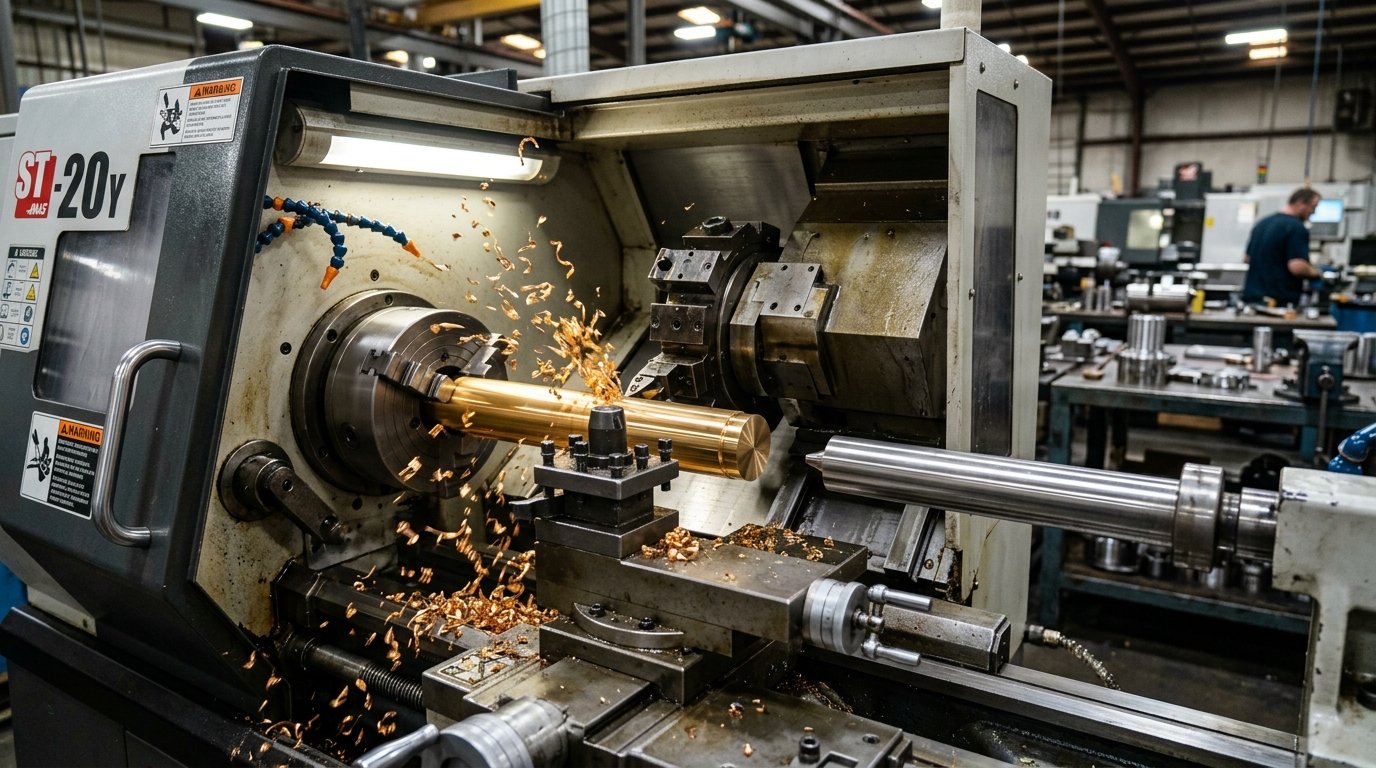
Brass is significantly easier to machine than stainless steel. CW614N free-cutting brass has a machinability rating of 100% (the benchmark), while 304 stainless steel rates at approximately 45%. This means brass components require less machining time, less tooling wear, and lower production costs per unit.
CNC turning speeds for brass reach 200-300 m/min compared to 60-120 m/min for stainless steel.
Thermal & Electrical Conductivity
Brass thermal conductivity ranges from 109-121 W/mK, making it far superior to stainless steel at 16 W/mK. For electrical applications, brass conductivity is 28% IACS compared to stainless steel's 2.5% IACS. This makes brass the clear winner for electrical connectors, heat exchangers, and thermal management components.
| Property | Brass (CW614N) | Stainless Steel (304) |
|---|---|---|
| Machinability Rating | 100% | 45% |
| Thermal Conductivity | 109-121 W/mK | 16 W/mK |
| Electrical Conductivity | 28% IACS | 2.5% IACS |
| Density | 8.4-8.73 g/cm3 | 7.93 g/cm3 |
| Typical Cost per kg | $3.50-5.00 | $4.00-7.00 |
| CNC Turning Speed | 200-300 m/min | 60-120 m/min |
Cost Analysis & Total Cost of Ownership
Brass raw material costs approximately $3.50-5.00 per kg versus $4.00-7.00 per kg for stainless steel. Combined with superior machinability reducing production time by 40-60%, brass components typically cost 35-50% less than equivalent stainless steel parts. Lead times are shorter due to faster machining cycles.
When to Choose Brass vs Stainless Steel
Choose brass for: electrical components, plumbing fittings, decorative hardware, valve bodies, and high-volume CNC turned parts. Choose stainless steel for: surgical instruments, food processing equipment, extreme chemical environments, and applications requiring non-magnetic properties.
| Property | Brass (CW614N) | Stainless Steel (304) |
|---|---|---|
| Machinability Rating | 100% | 45% |
| Thermal Conductivity | 109-121 W/mK | 16 W/mK |
| Electrical Conductivity | 28% IACS | 2.5% IACS |
| Density | 8.4-8.73 g/cm3 | 7.93 g/cm3 |
| Typical Cost per kg | $3.50-5.00 | $4.00-7.00 |
| CNC Turning Speed | 200-300 m/min | 60-120 m/min |
Frequently Asked Questions
Is brass stronger than stainless steel?
Stainless steel has higher tensile strength (515 MPa for 304 SS vs 350-400 MPa for CW614N brass). However, brass offers superior machinability, conductivity, and antimicrobial properties. Strength alone should not determine material selection.
Is brass more expensive than stainless steel?
No. Brass is typically 35-50% cheaper in total cost of ownership. While raw material prices are comparable, brass machines 2-3x faster, reducing production costs significantly. CNC tool life is also 3-5x longer when machining brass.
Is brass heavier than stainless steel?
Yes, slightly. Brass density is 8.4-8.73 g/cm3 compared to stainless steel at 7.93 g/cm3. The difference is approximately 6-10%, which is rarely a deciding factor in material selection.