Thermal Conductivity Comparison
Brass thermal conductivity ranges from 109-121 W/mK, making it approximately 7 times more thermally conductive than stainless steel at 16 W/mK. This dramatic difference makes brass the preferred choice for heat exchangers, radiator cores, heat sinks, and any application requiring efficient heat transfer.
Electrical Conductivity Comparison
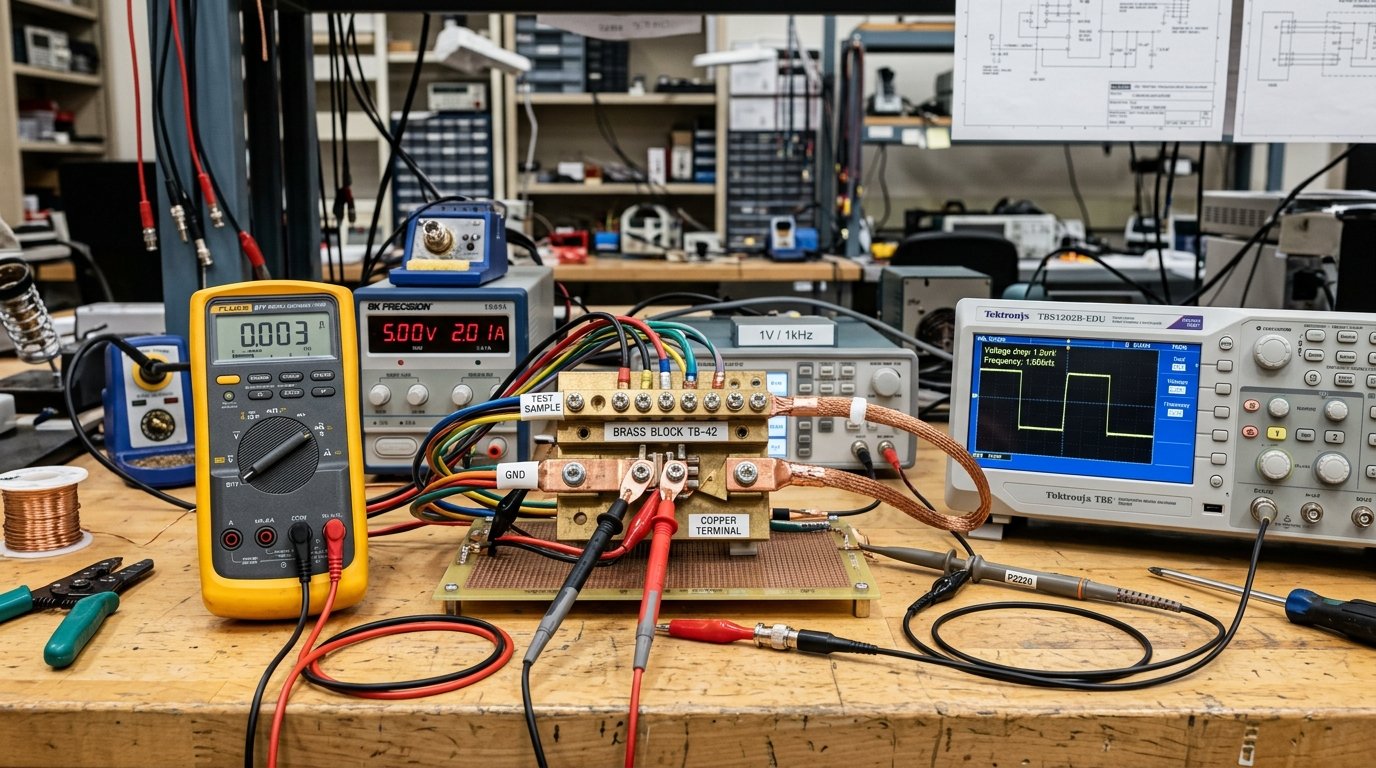
Brass electrical conductivity is 28% IACS (International Annealed Copper Standard) compared to stainless steel at merely 2.5% IACS. This 11:1 ratio makes brass essential for electrical connectors, terminal blocks, busbar components, and any current-carrying application. For 5G telecommunications infrastructure, brass connectors ensure minimal signal loss.
| Conductivity Property | Brass (CW614N) | Stainless Steel (304) | Ratio |
|---|---|---|---|
| Thermal Conductivity (W/mK) | 109-121 | 16 | ~7:1 |
| Electrical Conductivity (%IACS) | 28 | 2.5 | ~11:1 |
| Electrical Resistivity (micro-ohm-cm) | 6.2 | 72 | ~12:1 |
| Temperature Coefficient | 0.0015/C | 0.003/C | 2:1 |
Applications Requiring High Conductivity
EV charging connectors rated for 350kW fast charging require brass pins and terminals to handle 500A+ currents safely. Industrial sensor housings use brass for reliable signal transmission. HVAC heat exchanger tubes leverage brass thermal conductivity for efficient climate control.
Solar panel grounding lugs use brass for reliable electrical bonding.
When Conductivity Matters Less
For structural applications, chemical processing, or food-grade equipment where conductivity is irrelevant, stainless steel may be appropriate. However, when any thermal or electrical performance is required, brass is the engineering choice.
| Conductivity Property | Brass (CW614N) | Stainless Steel (304) | Ratio |
|---|---|---|---|
| Thermal Conductivity (W/mK) | 109-121 | 16 | ~7:1 |
| Electrical Conductivity (%IACS) | 28 | 2.5 | ~11:1 |
| Electrical Resistivity (micro-ohm-cm) | 6.2 | 72 | ~12:1 |
| Temperature Coefficient | 0.0015/C | 0.003/C | 2:1 |
Frequently Asked Questions
Is brass a good conductor of electricity?
Yes, brass is an excellent electrical conductor at 28% IACS. While not as conductive as pure copper (100% IACS), brass offers the ideal combination of good conductivity, superior machinability, and adequate strength for precision electrical components.
Why is brass preferred over stainless steel for electrical connectors?
Brass has 11 times higher electrical conductivity than stainless steel. This means lower resistance, less heat generation, and more efficient current flow. For high-current applications like EV charging (350kW+), brass is essential for safety and performance.
Does brass conduct heat better than stainless steel?
Yes, dramatically. Brass thermal conductivity (109-121 W/mK) is approximately 7 times higher than stainless steel (16 W/mK). This makes brass ideal for heat exchangers, radiator components, and thermal management systems.